
Mirroring Applications
Application mirroring makes an application available in additional workspaces without copying the source workspace content. This article explains who can configure mirroring, what is shared, how to enable it, and how to verify access safely.
Overview
Application mirroring lets a tenant manage one application from its source workspace and make that application available to users in selected workspaces. Users in a mirrored workspace can access the application without gaining access to the source workspace or its content.
Required Role
You must sign in with the Tenant role and have permission to edit the source application and manage its workspace visibility.
Prerequisties
Before you begin, confirm that the source application and each target workspace already exist. Also confirm that the intended users have access to the target workspaces. Mirroring does not add users to a workspace or change their assigned roles.
Default Behavior
An application remains available only in its source workspace until additional workspaces are selected. A mirror uses the same application URL and custom theme, but workspace content such as routes, posts, collections, announcements, and pins is not copied from the source workspace.
How Application Mirroring Works
Mirroring is configured at the workspace level. The application creator selects the workspaces where the application should appear. Access to each workspace continues to depend on the users and roles assigned to that workspace.
In the Applications list, the source application has no mirror indicator. A mirrored application displays a mirror icon to the left of the application name.
Original Application
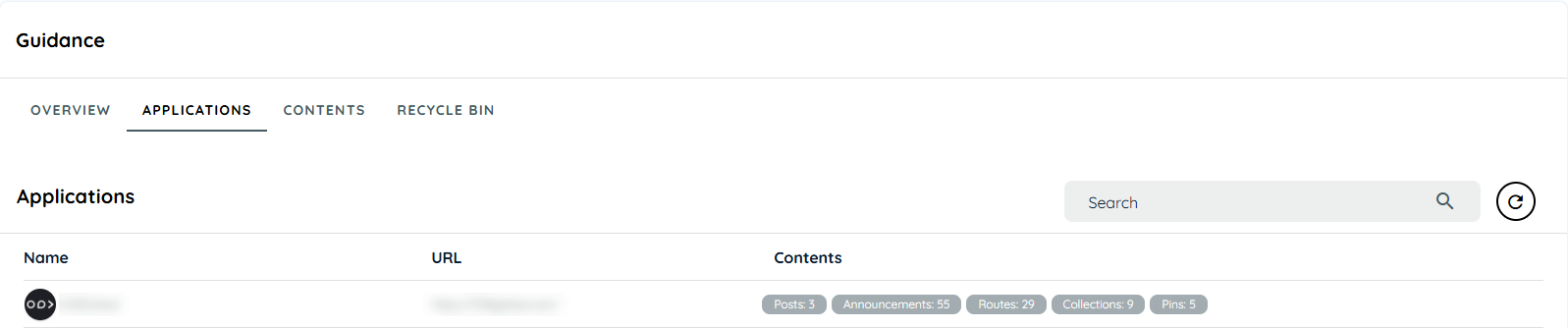
The source application in the Applications list has no mirror icon next to its name.
Mirrored Application
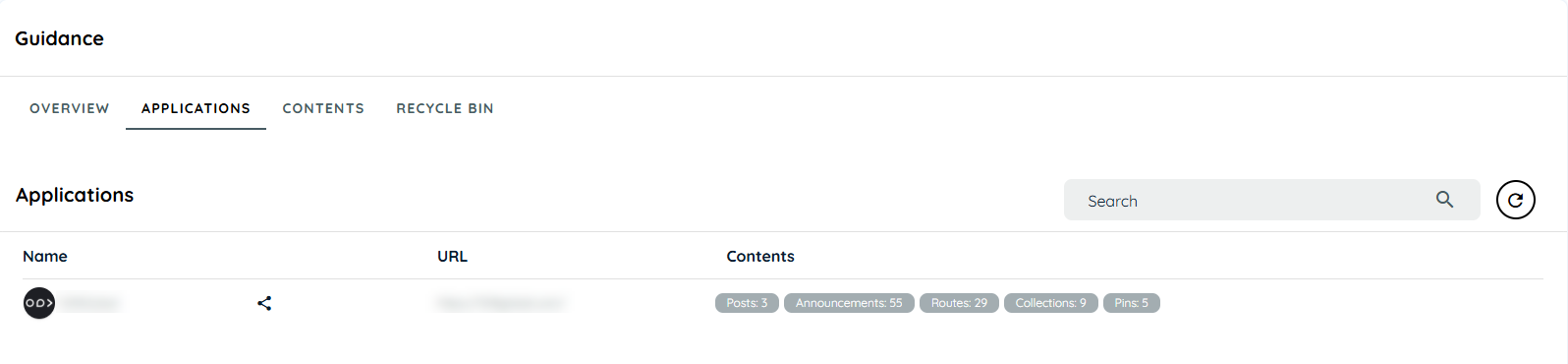
The mirrored application displays a mirror icon next to its name in the target workspace.
Example
A tenant has two workspaces, SUB1 and SUB2. Application 1 is created in SUB1 by a user with the Tenant role and is mirrored to SUB2, where a user has the Owner role. Source content from SUB1, including routes, posts, collections, announcements, and pins, is not copied to SUB2.
Users can create separate routes, posts, collections, announcements, and pins for the mirrored application in SUB2.
Configuring Application Mirroring
- Sign in with the Tenant role.
- Open Applications.
- Select the application that you want to mirror.
- Open the three-dot menu, and then select Edit Application.
- Scroll to Workspace Visibility.
- Select each workspace where the application should appear.
- Select Save.

Select the target workspaces, then save the application.
Validate the Configuration
Open the target workspace and go to Applications. Confirm that the application appears with the mirror icon. Open the mirrored application and verify that it uses the expected URL and custom theme, does not expose content from the source workspace, and allows content created in the target workspace to remain separate.
Related Document
Manage Users: https://docs.appnavi.com/docs/manage-users
Roles, and Permissions: https://docs.appnavi.com/docs/roles
Advantages of Mirroring Application
- A single application can be controlled from its source workspace and mirrored to one or more workspaces. Each mirror keeps the same application URL and custom theme while allowing workspace-specific content.
- Mirroring also supports organizational hierarchies by making the application available to users in different workspaces according to their assigned roles and responsibilities.
Updated about 1 month ago