
Workspaces
Overview
Workspaces provide an additional level of organization within an AppNavi tenant. Each Workspace keeps its data and content logically separated, allowing different groups of users to work with their own Routes, News, Collections, Hotspots, and other content.
Users can be assigned to one or more Workspaces. Their Workspace role determines what they can access and manage within each assigned Workspace.
Workspaces are useful when different teams, departments, business units, or environments need to manage AppNavi content separately while remaining within the same tenant.
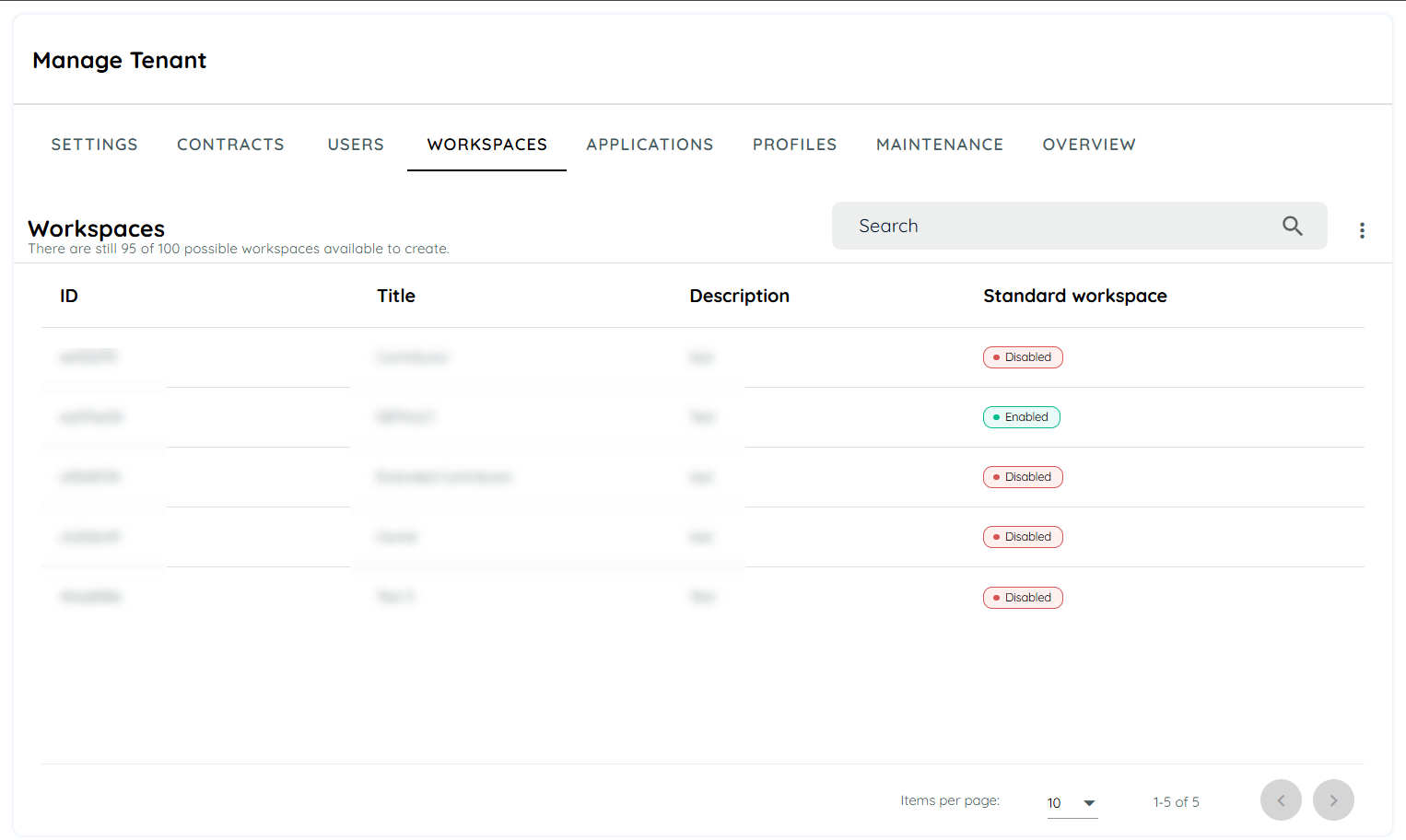
What Workspaces Control
A Workspace controls access to Workspace-specific content and data.
Depending on the user's assigned Workspace and role, they can access content such as:
- Routes
- Hotspots
- Posts
- Announcements
- Collections
- Pins
- Users and other Workspace-related data
A user only sees the Workspaces and content assigned to them.
This logical separation helps organizations keep content intended for one group separate from content managed by another group.
Required Role
Only a Tenant Owner can create a Workspace.
Workspace access and permissions can then be assigned to users according to their Workspace role.
The documented Workspace roles are:
- Tenant Owner
- Workspace Owner
- Contributor
- Extended Contributor
- Translator
A user can have different Workspace roles for different Workspaces.
For example, a user could be a Workspace Owner for the Sales Workspace and a Contributor in the Support Workspace.
Important: The role determines the user's authority within the selected Workspace. Assign only the Workspace access and role required for the user's responsibilities.
Prerequisites
Before creating a Workspace, make sure:
- You have the Tenant Owner role.
- You know why the Workspace is required.
- You have a clear name for the Workspace.
- You know which users should have access to it.
- You have decided which users require management, contribution, or translation permissions.
You do not need to configure content before creating the Workspace. Content can be assigned or created after the Workspace is available.
Customer Workflow
A typical Workspace setup follows this workflow:
Plan the Workspace → Create the Workspace → Assign users → Set permissions → Set the default or preferred Workspace if required → Add or move content → Validate access
1. Plan the Workspace
Decide what the Workspace represents before creating it.
For example:
- Sales Enablement
- Customer Support
- Internal Training
- Development
- Regional Content
Choose a name that makes the purpose clear to administrators and users.
2. Create the Workspace
- Open Manage Tenant.
- Select the Workspaces tab.
- Click the + icon.
- Enter the Workspace Title.
- Enter a Description if required.
- Click Save Changes.
The Workspace then appears in the Workspace list.
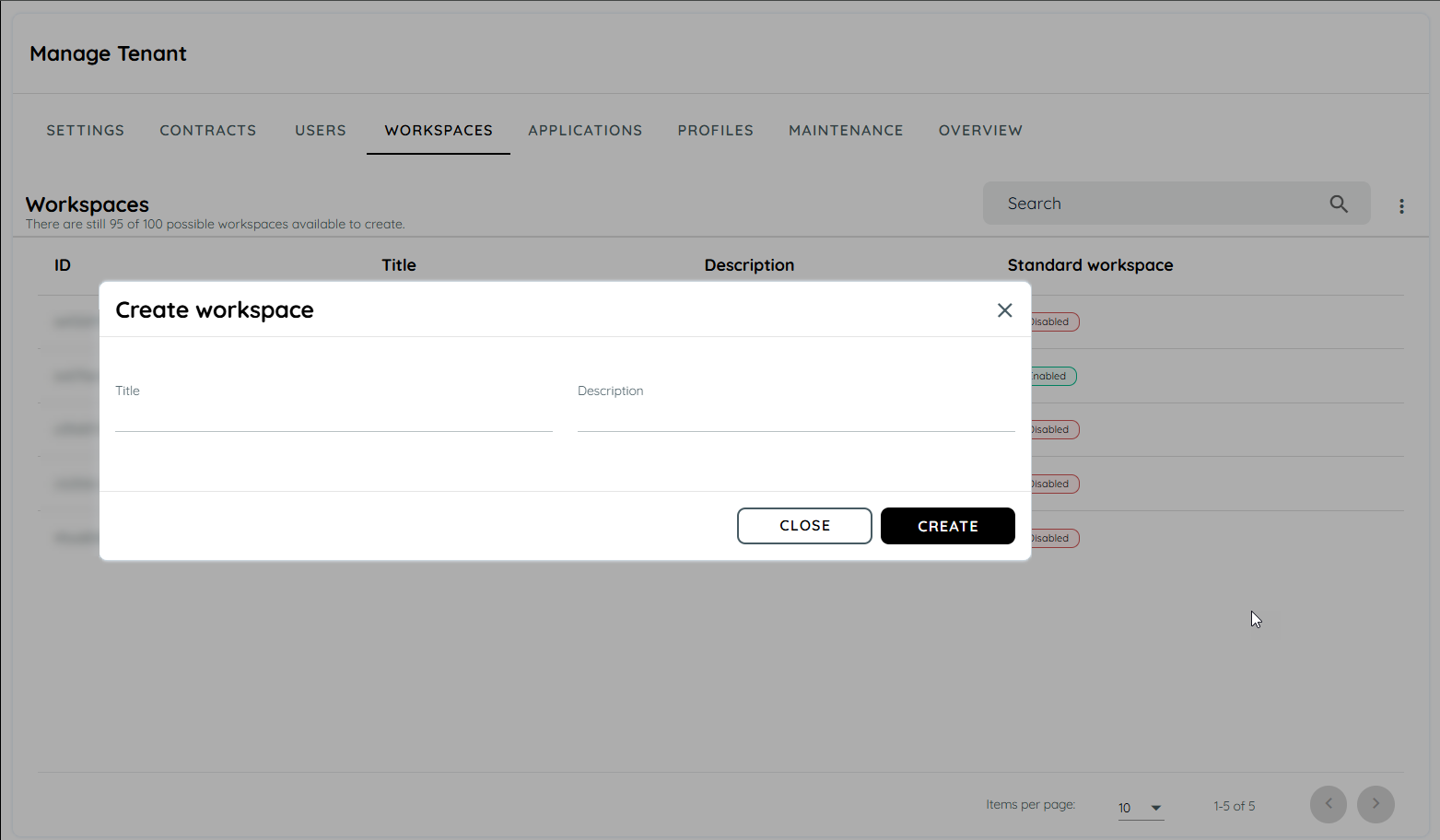
Create Workspace
Understanding the Workspace List
The Workspace list provides an overview of the Workspaces configured for the tenant.
The screenshot shows columns for:
- ID
- Title
- Description
- Standard Workspace
The Standard Workspace indicator identifies the Workspace configured as the tenant's default Workspace.
Default Workspace
A Default Workspace is configured at the tenant level.
It is treated as the default Workspace for users within the tenant.
Set the Default Workspace
- Open Manage Tenant.
- Go to Workspaces.
- Find the Workspace you want to use as the default.
- Open its three-dot context menu.
- Select Set Default Workspace.
The Workspace is then marked as the default in the Workspace list.
When to Use a Default Workspace
Use a Default Workspace when most users should start with the same Workspace.
Example:
An organization has several Workspaces but most users work with the Default Workspace. Setting it as the tenant-level default provides a common starting point while individual users can still have their own preferred Workspace.
Preferred Workspace
A Preferred Workspace is configured for an individual user.
A user can have access to multiple Workspaces but only one preferred Workspace at a time.
The preferred Workspace can be changed when the user's responsibilities change.
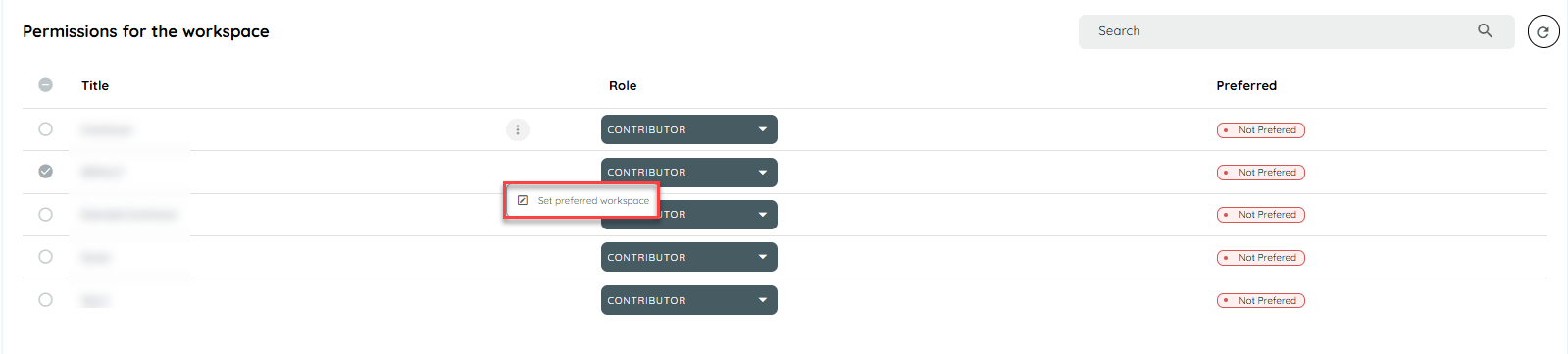
Set a Preferred Workspace
- Open Users.
- Find the required user.
- Open the user's context menu.
- Select Edit User.
- Locate the Workspaces section.
- Open the three-dot context menu for the required Workspace.
- Select Set Preferred Workspace.
Only Workspaces assigned to that user can be selected as the preferred Workspace.
Default vs. Preferred Workspace
| Setting | Applies to | Purpose |
|---|---|---|
| Default Workspace | Tenant | Provides the tenant-level default Workspace |
| Preferred Workspace | Individual user | Provides the user's preferred Workspace |
Example:
The tenant's Default Workspace can be Company-wide Training, while a specific user's Preferred Workspace can be Sales Training.
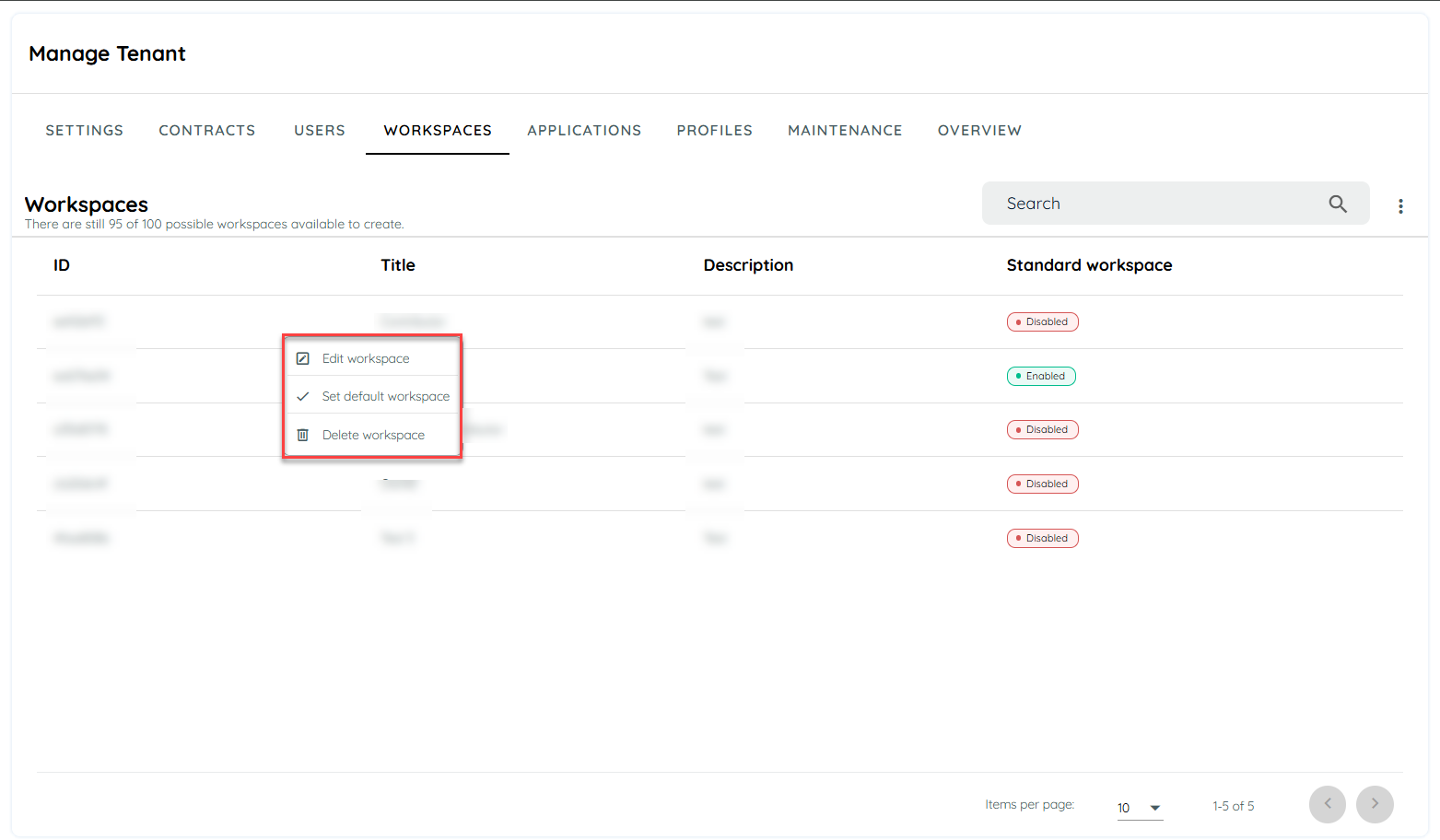
Assign Users to Workspaces
Creating a Workspace does not by itself determine which users can work in it. Users must have the appropriate Workspace assignment and role.
Workspace permissions define the user's access and authority for each Workspace.
A user can be assigned to multiple Workspaces and can have a different role in each one.
Example
| User | Workspace | Role |
|---|---|---|
| User A | Sales | Workspace Owner |
| User A | Support | Contributor |
| User B | Sales | Translator |
| User C | Support | Contributor |
This structure allows the same user to work across multiple areas while maintaining different responsibilities in each Workspace.
Workspace Permissions
Workspace permissions determine the role a user has within each Workspace.
When assigning Workspace permissions:
- Select the user.
- Select the required Workspaces.
- Assign the appropriate role for each selected Workspace.
- Save the user configuration.
If the user is assigned the Tenant Owner role, all Workspaces are selected and the Workspace assignments cannot be unchecked.
For users who are not Tenant Owners, individual Workspaces can be selected and a role can be assigned to each selected Workspace.
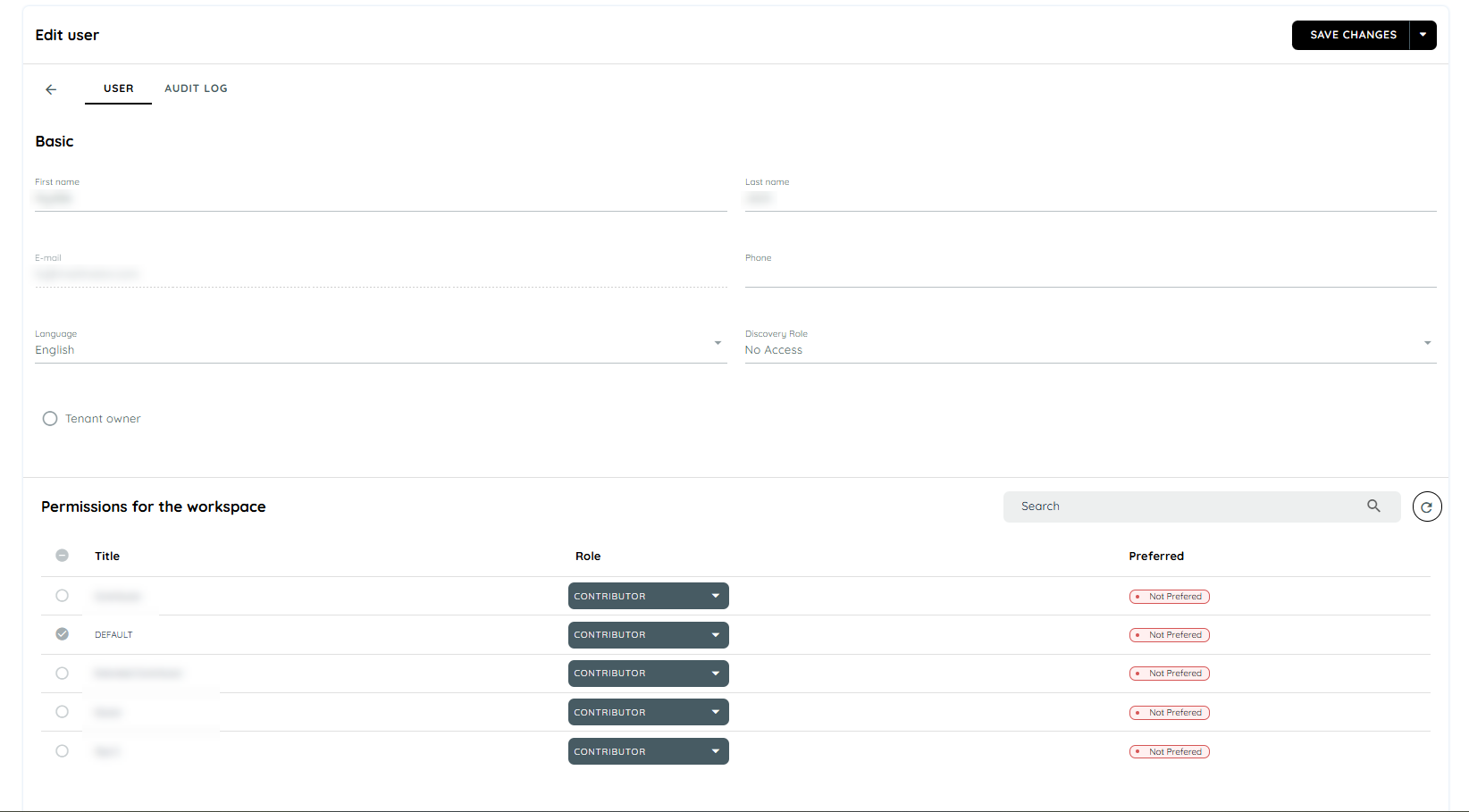
Workspace Permissions
The permissions screen shows:
- Workspace
- Assigned role
- Preferred status
The screenshot demonstrates how Workspace access and roles are assigned to an individual user.
Suggested alt text:
Workspace permissions showing assigned Workspaces, user roles, and preferred Workspace status.
Choosing the Right Workspace Role
Use the role that matches the user's responsibility.
| Role | Use when the user needs to... |
|---|---|
| Tenant Owner | Manage the tenant and its Workspaces |
| Workspace Owner | Manage a specific Workspace |
| Contributor | Create or manage Workspace content |
| Translator | Work with content translation within the Workspace |
Assign the lowest level of access that allows the user to perform their responsibilities.
Move and Copy Content Between Workspaces
Content can be moved or copied between Workspaces when the user has the required permissions.
The documented permissions for these actions include:
- Tenant Owner
- Workspace Owner
- Contributor
Supported content includes:
- Routes
- Posts
- Announcements
- Collections
- Pins
- Hotspots
Move or Copy Content
The same general workflow applies to supported content types.
- Open the relevant content section.
- Select the content item.
- Open its three-dot context menu.
- Select the Move or Copy option.
- Select the target Workspace.
- Complete the action.
Example:
A Route created in a Development Workspace can be copied to a Production Workspace when the user has the required permissions.
Move vs. Copy
| Action | Result |
|---|---|
| Move | Transfers the content to another Workspace |
| Copy | Creates a copy of the content in another Workspace |
Use Copy when the original content should remain available in the source Workspace. Use Move when the content should belong to the target Workspace instead.
Related Administration Areas
Workspace configuration is connected to several other AppNavi administration areas:
Manage Tenant — Create and manage Workspaces.
Users — Assign Workspaces, roles, and preferred Workspaces.
Updated 17 days ago